

Remembering and Celebrating Life: UIW Observes Día de los Muertos
The Catholic community observed All Saints’ Day on Sunday, Nov. 1, and All Souls’ Day on Monday, Nov. 2. These sacred observances honor the saints of the Catholic faith and the souls of departed loved ones. For many, they offer an opportunity to deepen their faith, reflect on the reality of loss and celebrate the gift of life.
During the same time, many Mexican and Latino communities celebrate Día de los Muertos, or Day of the Dead, a tradition that honors the lives and memories of deceased loved ones. Through this sacred holiday, families celebrate those who have passed while believing their spirits return to visit the living. Although distinct in origin and practice, Día de los Muertos shares with All Saints’ Day and All Souls’ Day a focus on remembrance, love and the enduring connection between the living and the dead.
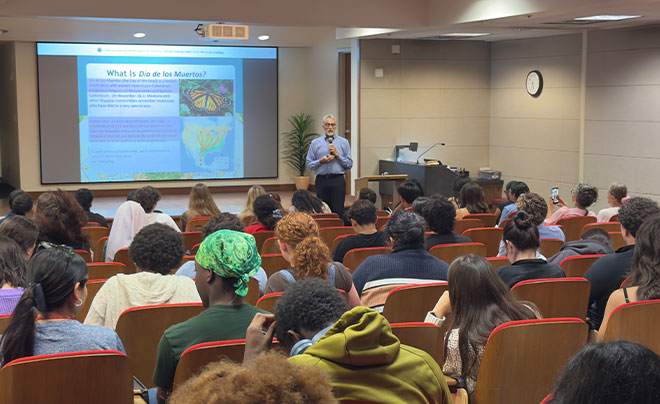
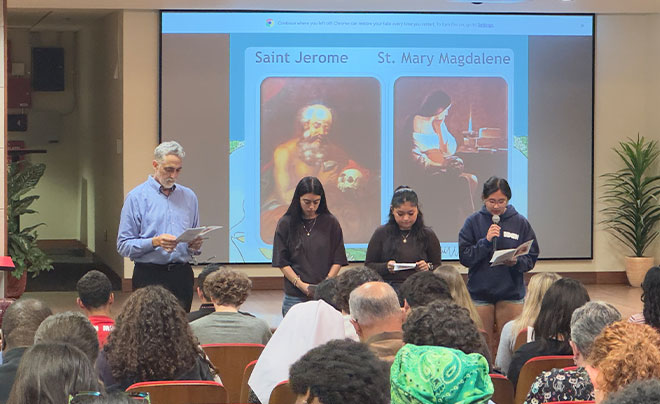
On Tuesday, November 2, Associate Vice President for Mission & Ministry and Diversity, Equity & Inclusion Arturo Chavez, PhD, alongside his students, presented on Día de los Muertos in the J.E. and L.E. Mabee Library Auditorium. Community members gathered to learn about the holiday’s history, meaning and traditions.
Guests learned about the special ofrendas, or altars, created to honor loved ones who have passed away. Chavez explained that many ofrendas are decorated with vibrant colors, framed photographs, and meaningful items that reflect the lives of those being remembered. They often include favorite foods and personal belongings left as offerings. Brightly colored marigolds, known as cempasúchil, are also placed on and around the altars to help guide the spirits of loved ones to the offerings.
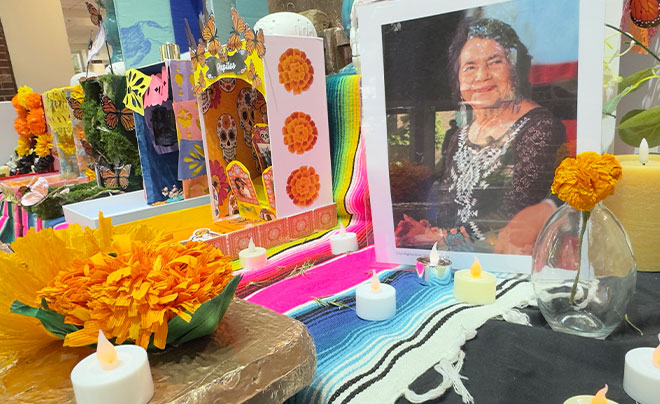
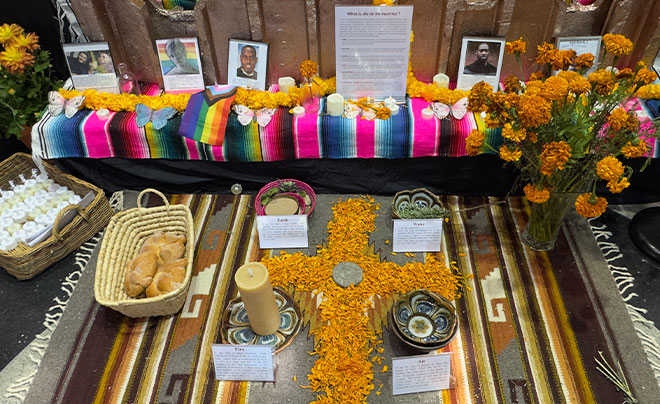
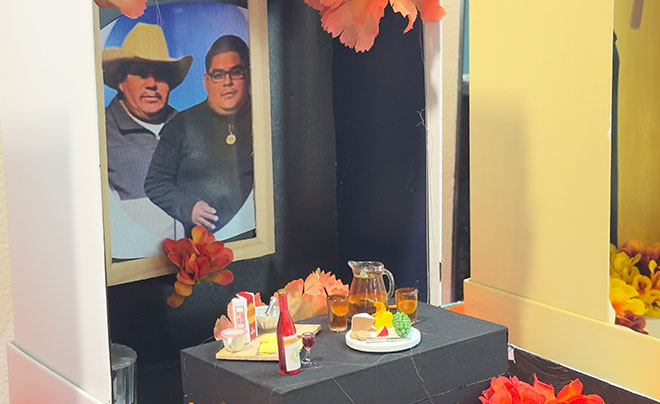
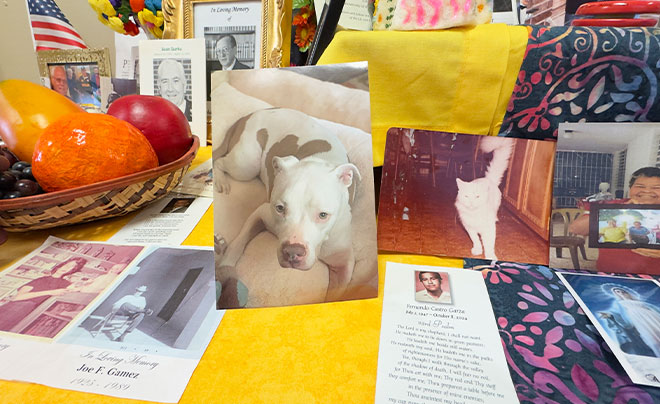
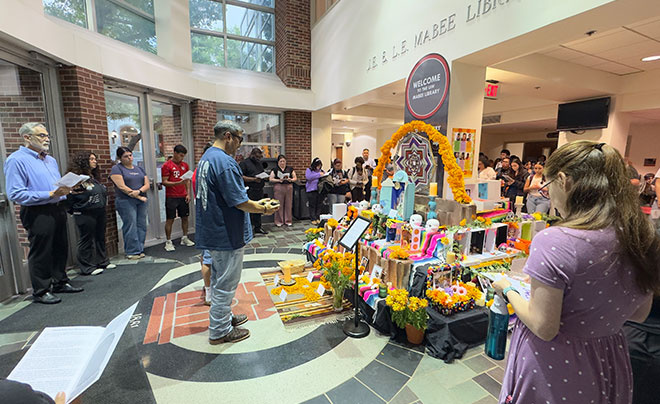
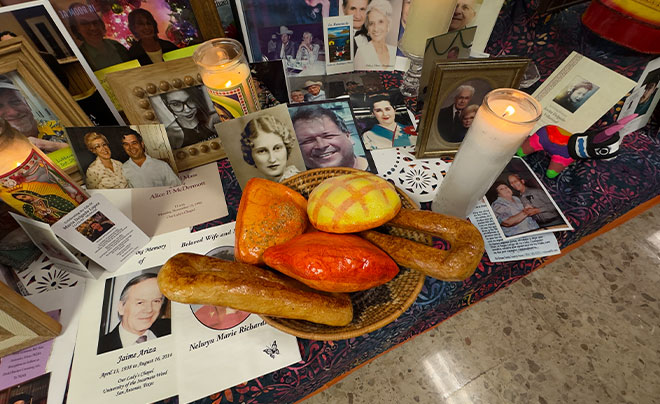
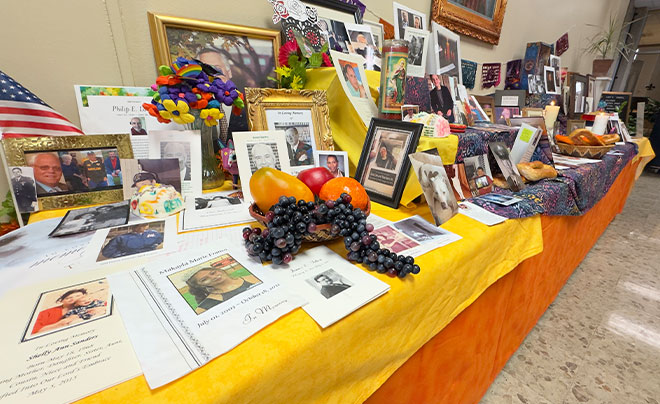
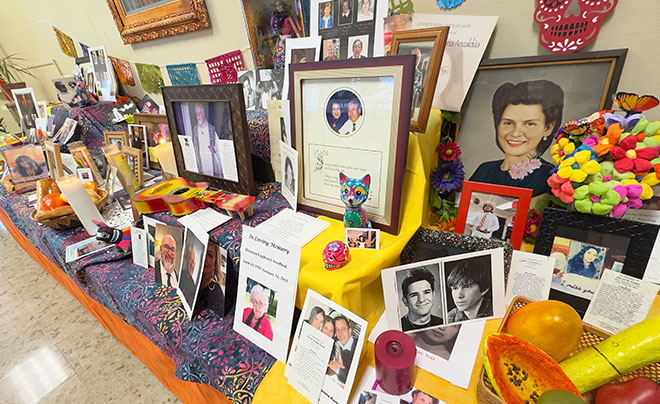
The altars serve as small temples and incorporate the sacred elements of fire, water, earth and air. In Mesoamerican culture, the number four is significant because it represents the cardinal directions and the cycles of life. Earth is represented on the first level of the altar, honoring Mother Earth as both the womb that gives life and the tomb to which all return. Fire, symbolized by candles, represents Jesus as the Light of the World. Water signifies life and is often included as holy water to represent baptism. Finally, air is represented through incense and papel picado, whose movement in the wind symbolizes the presence of this sacred element.
Although the holiday’s skull and skeleton imagery may seem unsettling at first glance, Chavez noted that these symbols are not meant to evoke fear. Instead, they serve as powerful reminders of life’s impermanence and encourage people to cherish their time and live with purpose.
The presentation concluded with a prayer service created and led by Chavez’s students in observance of the holiday.
UIW’s Mission and Ministry set up an ofrenda in front of Our Lady’s Chapel in honor of Día de los Muertos. Community members were invited to add photos of their loved ones, joining Mission and Ministry in remembering departed faculty, staff, Sisters of Charity of the Incarnate Word and others. The ofrenda will remain on display through November 16.